The Evening-Before Check That Keeps a Public-Land Hunt Legal
Ensuring an Ethical Hunting Experience
Hunting rules aren’t always easy to sort out. A map on your phone may disagree with a printed map, and a sign in the field may not seem to match the regulation booklet. When that happens, you can be left wondering where you’re allowed to hunt, which methods are legal, or exactly when the season opens. A careful check the night before gives you time to answer those questions at home instead of guessing in the field.
Understanding Your Hunting Regulations
Rules change with the species, hunting unit, season, and method of take. Start with the current regulations from your state or regional wildlife agency. Confirm the unit boundaries, season dates, license and tag requirements, legal equipment, bag limits, and any special restrictions that apply to your hunt.
An old rulebook, a saved social-media post, or advice from a friend isn’t enough. Even good advice can be out of date. Go to the wildlife agency’s official website, download the pages you’ll need when you’re offline, and look for emergency closures or in-season changes. If something still isn’t clear, call the agency or a local office. Write down the date, the name of the person you spoke with, and the answer you received.
Matching Maps to Legal Boundaries
A trail shown on a GPS unit or hiking app isn’t automatically open to the public. It may cross private property, pass through a closed area, or follow a route where hunting is prohibited. Compare the official hunting-unit map with your navigation app, then confirm the access rules with the agency or land manager responsible for the property.
Public land can also be surrounded by private property. Find a legal access point and plan a route that stays clear of uncertain boundaries. Mark it before the trip. If either your main route or your backup appears to cross private land or a restricted area, choose another route or another place to hunt. A five-minute change of plan is much easier than dealing with a trespass problem later.
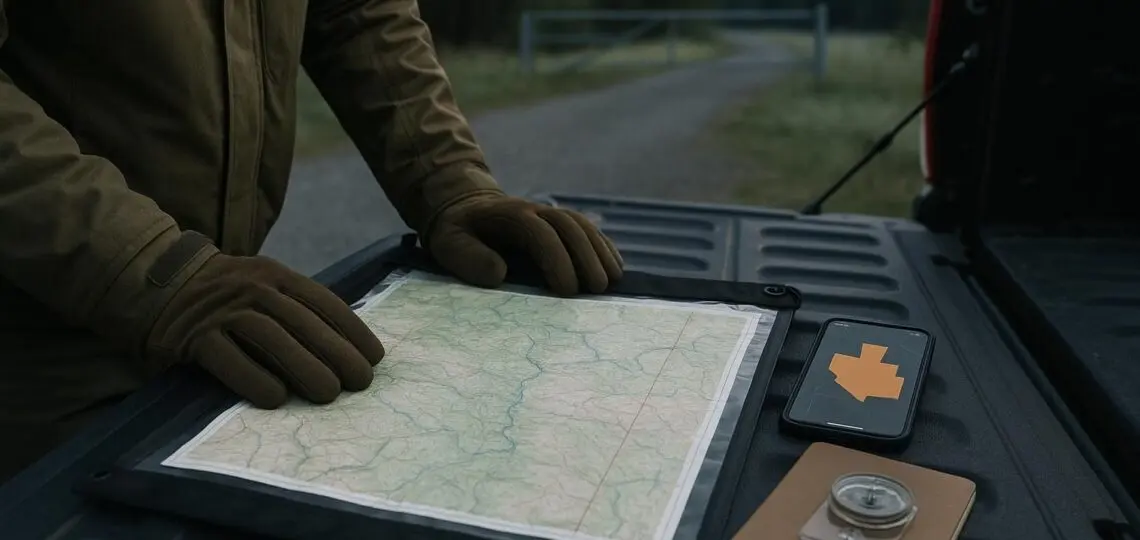
Carry a printed map that shows the hunting unit, access points, property lines, and emergency contacts. Keep a digital copy on your phone or GPS device too, but don’t rely on electronics alone. Batteries die, screens break, and remote country often has no signal.
Making Ethical Decisions Before the Hunt
Good hunters decide ahead of time which shots they will take and which ones they won’t. Wind, rain, fog, fading light, difficult terrain, or other people nearby can turn an otherwise reasonable opportunity into an unsafe one.
Set firm limits before you enter the field. Don’t shoot unless you’ve positively identified the animal, know what lies beyond it, and are confident the shot is within your ability. If the weather worsens or the terrain becomes dangerous, stop. The law sets the minimum standard; ethical hunting often calls for more restraint than the law requires.
Think about recovery before pulling the trigger. Look at the slope, water, thick brush, property lines, and the distance you’ll need to carry meat. If recovering the animal could force you to trespass or take an unreasonable risk, don’t take the shot, even if the season is open and the animal is legal.
Building Conservation into the Plan
Hunting is part of wildlife management, and each hunter has a role in keeping wildlife populations and habitat healthy. Review the bag limit, tagging procedure, harvest-reporting requirements, and rules for transporting or disposing of a carcass. Know when and where the tag must be attached and what information has to be recorded immediately after the harvest.
Check those details again before leaving home. Closures and reporting requirements can change during the season, so use official sources and keep the relevant instructions with your license and maps.
Take care of the land as seriously as you take the regulations. Pack out your trash, avoid damaging vegetation, stay on authorized routes where required, and give other visitors room. If an area is crowded or especially fragile, consider another route or location. Leaving a place in good condition protects habitat and helps keep it open to hunters in the future.
The Night-Before Checklist
Before turning in for the night, run through one final checklist. It can catch the small oversight that would otherwise become a major problem the next morning:
- Read the current rules for your species, unit, season, and hunting method.
- Check your license, permit, tag, identification, and reporting requirements.
- Make sure your access point agrees with land-manager rules and property maps.
- Review both your main route and your backup, avoiding private, uncertain, or closed areas.
- Check the weather, daylight hours, fire restrictions, and terrain conditions.
- Decide what you’ll do if you miss a shot, wound an animal, lose the trail, or encounter unsafe conditions.
- Pack printed maps, offline navigation, emergency contacts, water, and essential safety gear.
- Plan for field care, meat transport, trash removal, and lawful disposal of waste.
A checklist can’t replace sound judgment, but it makes good judgment easier when plans change or pressure builds. Taking a little time to verify the details makes a safe, legal, and successful hunt more likely. Respect for wildlife, property boundaries, other visitors, and the rules is what helps keep public-land hunting available to everyone.